
Feeding tarantulas
The short answer: offer prey no longer than the spider's body (not counting legs): slings twice a week, juveniles once a week, adults every one to two weeks. And the one hard rule: never feed a tarantula that is molting or about to molt.
Schedule by age
| Stage | How often | Prey |
|---|---|---|
| Sling (spiderling) | Twice a week | Pinhead crickets or tiny dubia nymphs; pre-killed prey works for the smallest slings |
| Juvenile | Once a week | Small crickets, dubia roaches, or mealworms |
| Adult | Every 7-14 days | One or two adult crickets, dubia roaches, or mealworms |
Tarantulas are ambush predators with slow metabolisms — an adult that eats every two weeks is normal, not neglected. Judge by the abdomen: plump and rounded is healthy; shriveled means feed more often; hugely swollen means cut back.
Prey size
Prey should be no longer than the spider's body length, legs excluded. Oversized prey stresses the spider and can injure it — a large cricket can kick and bite, and a superworm can bite back. For slings, err on the small side, and don't be surprised if a tiny sling prefers pre-killed prey: some won't take live food until they're bigger.
The molt rule
Signs of an approaching molt: the spider stops eating, its abdomen darkens or develops a bald spot, and it may web a mat or seal itself in a hide. When you see this, stop feeding entirely. A molting tarantula is soft, helpless, and unable to defend itself — a live cricket or roach left in the enclosure can and will eat it. After the molt, wait until the fangs have hardened and darkened before feeding again: a few days for slings, up to two weeks for large adults. A freshly molted spider with soft fangs cannot eat and should not be offered food.
Mealworms, and removing uneaten prey
Mealworms and superworms burrow, so offer them with tongs or crush the head first — a buried worm is a wasted worm, and one that surfaces later can bite a resting or molting spider. Remove any uneaten prey within 24 hours, every time. And keep a water dish full at all times: tarantulas drink, and a dish also helps with enclosure humidity.
Order the feeders in this guide
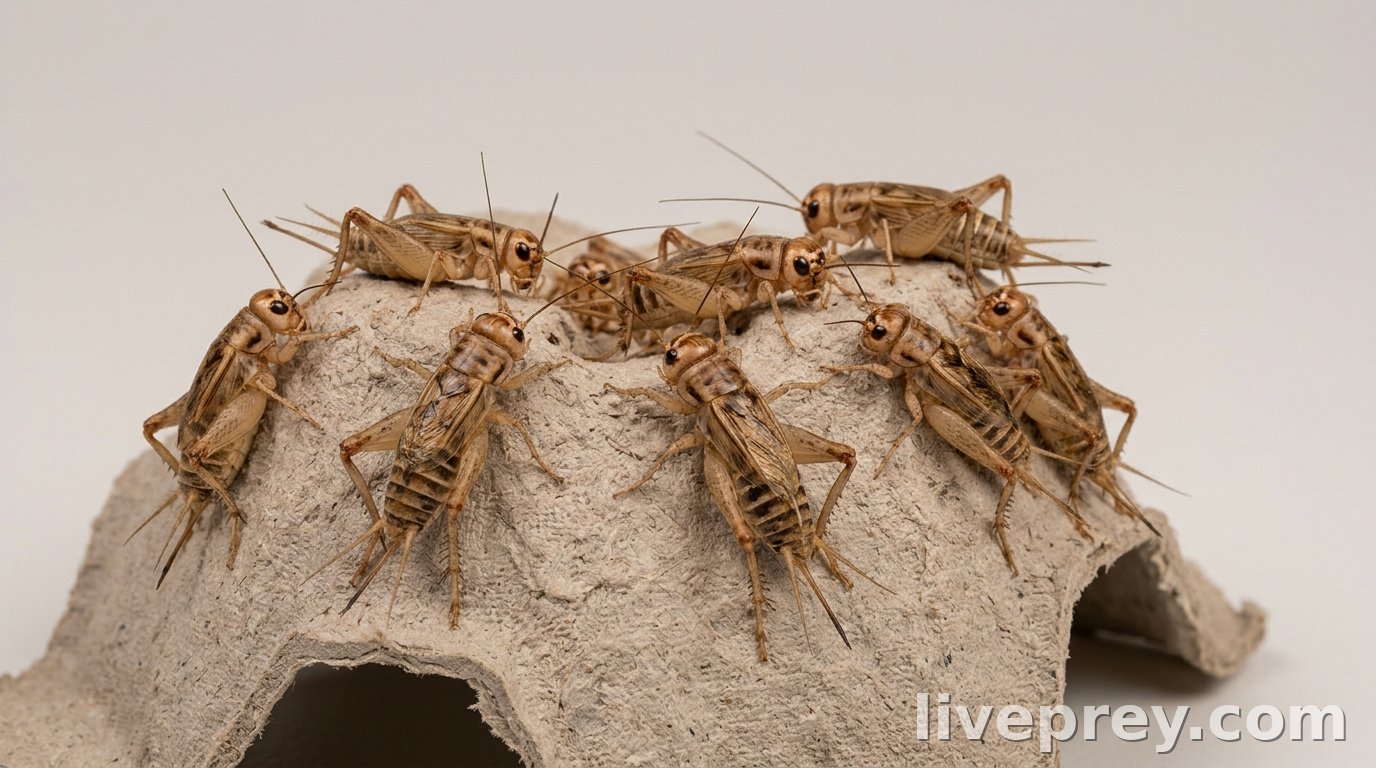
Banded Crickets - 1,000 ct
$37.94 FREE shipping
Additional units only $28.99 each.
The classic staple feeder, bought weekly by reptile keepers everywhere. Banded crickets are hardy, active, and easy for bearded dragons, leo...
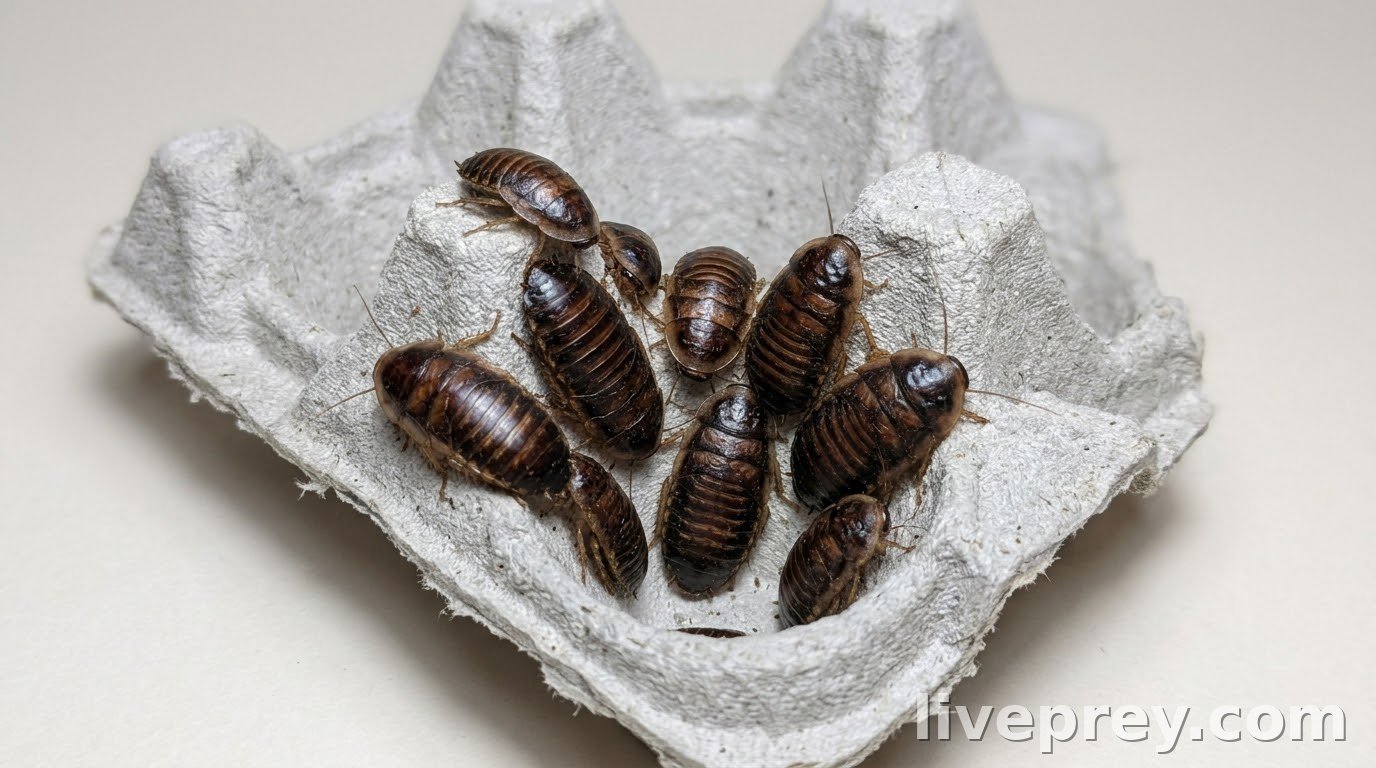
Dubia Roaches - Small - 100 ct
$28.94 FREE shipping
Additional units only $19.99 each.
Small dubia roaches are quiet, slow-moving, long-lived, and more nutritious than crickets — the premium staple for bearded dragons, geckos, ...
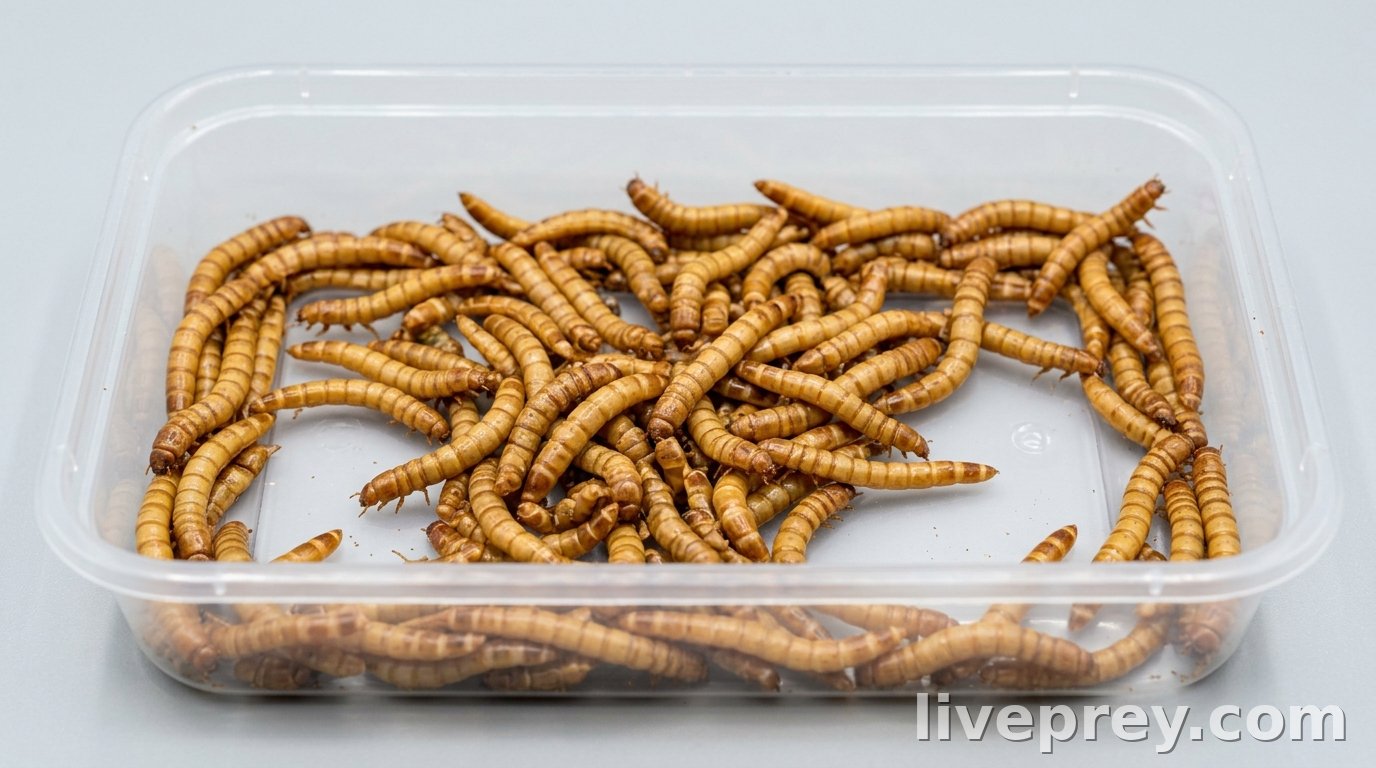
Mealworms - Large - 1,000 ct
$18.99 FREE shipping
Large mealworms are the cheapest staple in the catalog and fridge-storable, so a bulk box lasts. Great for leopard geckos, birds, and smalle...
You order here; we place your order with the breeder, and the breeder ships direct to you. Live arrival is covered within the supplying breeder's window — see our live arrival policy. General keeper guidance only, not veterinary advice: if your animal is sick, not eating, or losing weight, see a reptile or aquatic vet.