
Feeding crested geckos
The short answer: the staple diet for a crested gecko is crested gecko diet (CGD) — a powder mixed with water into a paste — offered fresh every other day. Live insects are a supplement, not the main diet: a few small insects once or twice a week, dusted with calcium.
CGD: the staple
CGD is a complete diet formulated for crested geckos, and it should be the backbone of feeding. Mix it fresh and offer it every other day, in a shallow dish placed up high where the gecko actually travels. Remove it after 24-36 hours — dried-out CGD is ignored, and old paste grows mold in a humid enclosure. If your gecko seems to ignore CGD, try a different flavor or brand before assuming it won't eat it: flavor preferences are real, and a gecko that refuses one formula may take another eagerly.
Insects: supplement, not staple
Good insects for cresties are small dubia roaches and small crickets, sized no wider than the space between the gecko's eyes. Offer a few once or twice a week, dusted with calcium plus D3, and gut-load the insects first. Insects add protein, variety, and hunting enrichment — but a crested gecko fed mostly insects ends up with an unbalanced diet, since insects alone lack the fruit, vitamins, and calcium balance that CGD provides.
What to avoid
Mealworms and superworms are poor choices for crested geckos as anything more than a rare treat. Their hard chitin is difficult to digest and a known impaction risk, and superworms are usually too large and strong-jawed for a crestie anyway. Waxworms are the same story in a different way: fatty and addictive, so a gecko fed waxworms often starts refusing everything else. Stick to soft-bodied, appropriately sized insects.
Timing and hydration
Crested geckos are nocturnal — offer food in the evening, and remove uneaten insects the next morning so they don't stress or bite the gecko. Mist the enclosure in the evening too: cresties drink water droplets from leaves and glass, and CGD itself contributes moisture. A gecko that eats CGD regularly, gets a few dusted insects weekly, and has fresh water droplets available is covered.
Order the feeders in this guide
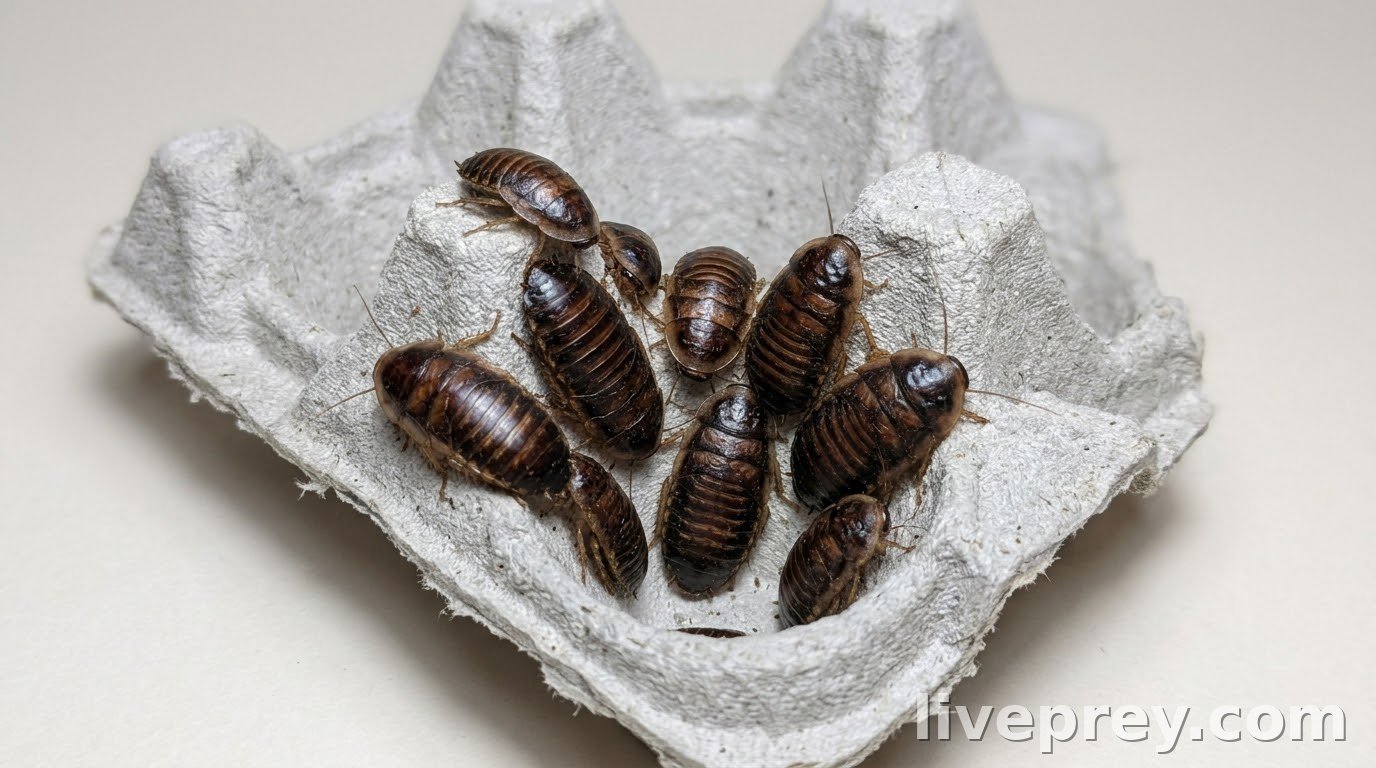
Dubia Roaches - Small - 100 ct
$28.94 FREE shipping
Additional units only $19.99 each.
Small dubia roaches are quiet, slow-moving, long-lived, and more nutritious than crickets — the premium staple for bearded dragons, geckos, ...
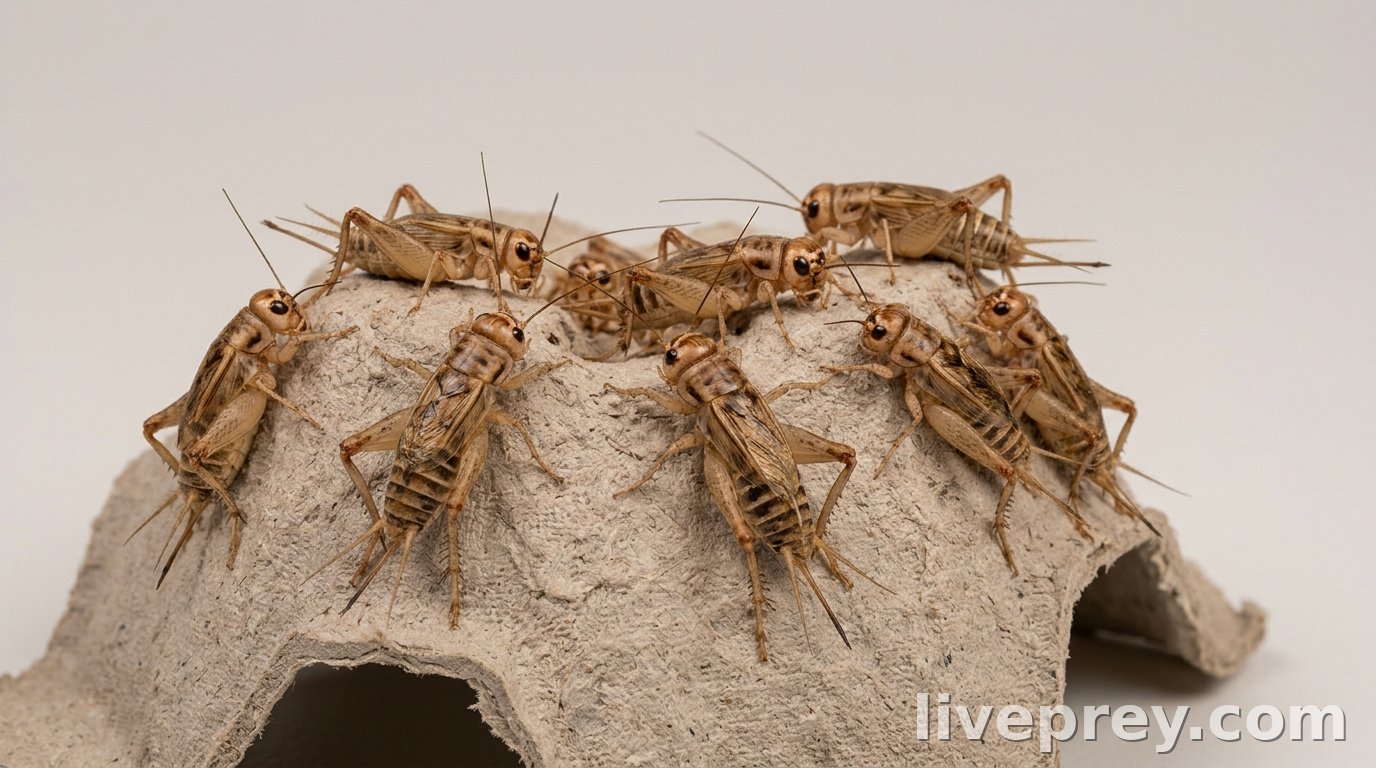
Banded Crickets - 1,000 ct
$37.94 FREE shipping
Additional units only $28.99 each.
The classic staple feeder, bought weekly by reptile keepers everywhere. Banded crickets are hardy, active, and easy for bearded dragons, leo...
You order here; we place your order with the breeder, and the breeder ships direct to you. Live arrival is covered within the supplying breeder's window — see our live arrival policy. General keeper guidance only, not veterinary advice: if your animal is sick, not eating, or losing weight, see a reptile or aquatic vet.