
How to breed dubia roaches
The short answer: a warm, dark bin with egg crate, one male to three to five females, steady food and water, and three to five months of patience. Dubia roaches breed readily once the conditions are right — the main mistake is harvesting breeders before the colony is established.
Setup: warm, dark, ventilated
Use an opaque plastic bin with a ventilated lid — dubia roaches prefer the dark and breed better without light. Stand egg crate flats upright inside for hiding space and surface area. No substrate is needed; a bare floor is easier to clean. Put a heat mat under or on the side of the bin: breeding needs warmth, ideally 85-90°F. Below about 80°F, breeding slows sharply, and a cold colony barely reproduces at all.
Colony ratio: one male to three to five females
Males have full wings and are slimmer; females have short stub wings and are broader. Stock roughly one male for every three to five females — extra males just eat, fight, and take up space. A starter colony of a few hundred mixed roaches, with a good share of adult females, is a realistic starting point for one pet; scale up if you feed several animals.
Reproduction: live birth, on a slow clock
Dubia roaches give live birth — no egg cases to find. A mature female produces a batch of roughly 20-40 nymphs about every two months, and nymphs take roughly four to six months to mature at breeding temperatures. That slow clock is why a colony takes three to five months to become self-sustaining: you're waiting for the first generation of babies to grow up and start breeding themselves.
Feeding and watering the colony
Feed roach chow, dry oats, or a commercial roach diet as the base, plus fresh fruit and vegetables for moisture and nutrition — the same gut-loading logic as feeder insects, since colony health becomes pet nutrition. Water comes from produce or water gel crystals, never an open dish: tiny nymphs drown in standing water. Remove old produce before it molds.
When to start harvesting
Don't feed off your breeders until the colony is established — roughly three to five months in, when you see nymphs of all sizes and the population is clearly growing. Harvest nymphs sized to your pet, and leave the adult females alone: they are the factory. If the colony stalls, check temperature first — it's the cause more often than food or ratio. Note that dubia roaches are illegal in Florida and restricted in a few other states; see our state restrictions page.
Order the feeders in this guide
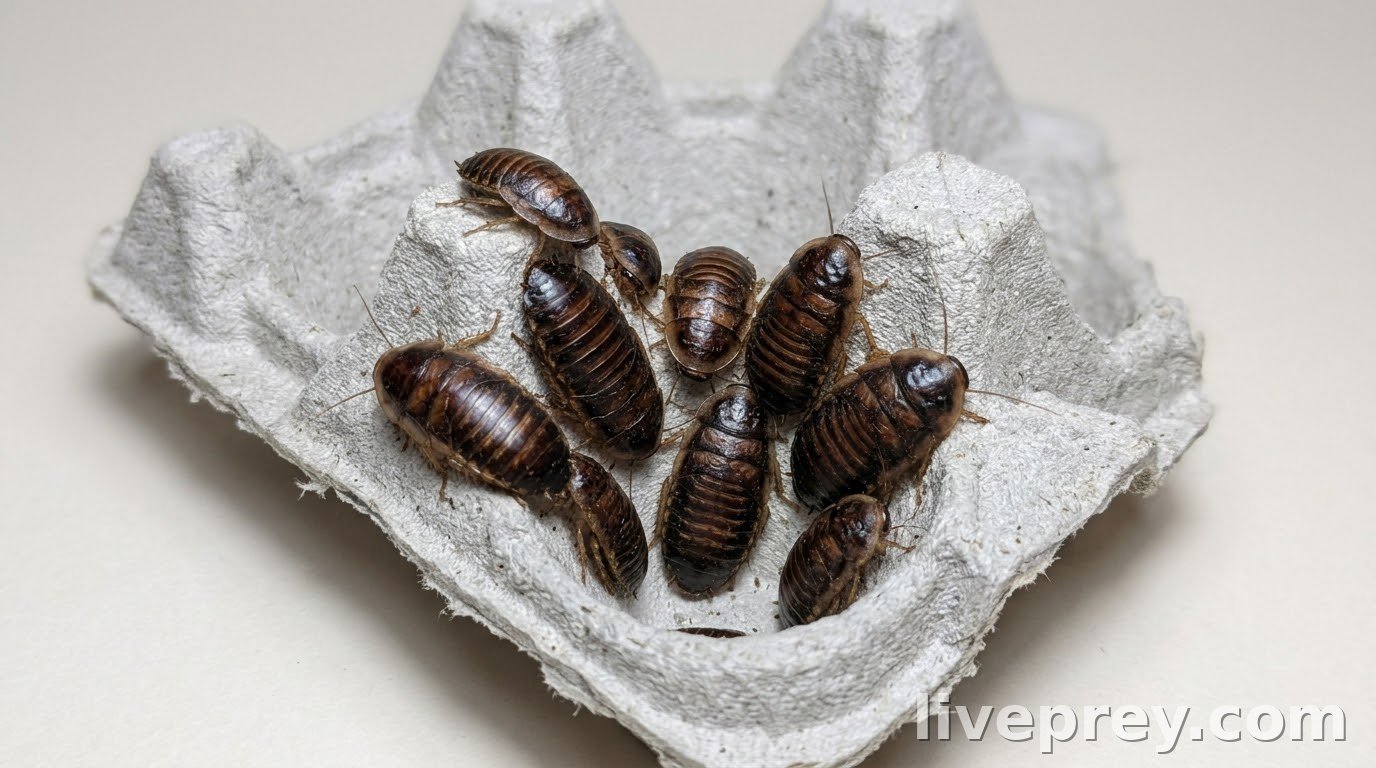
Dubia Roaches - Small - 100 ct
$28.94 FREE shipping
Additional units only $19.99 each.
Small dubia roaches are quiet, slow-moving, long-lived, and more nutritious than crickets — the premium staple for bearded dragons, geckos, ...
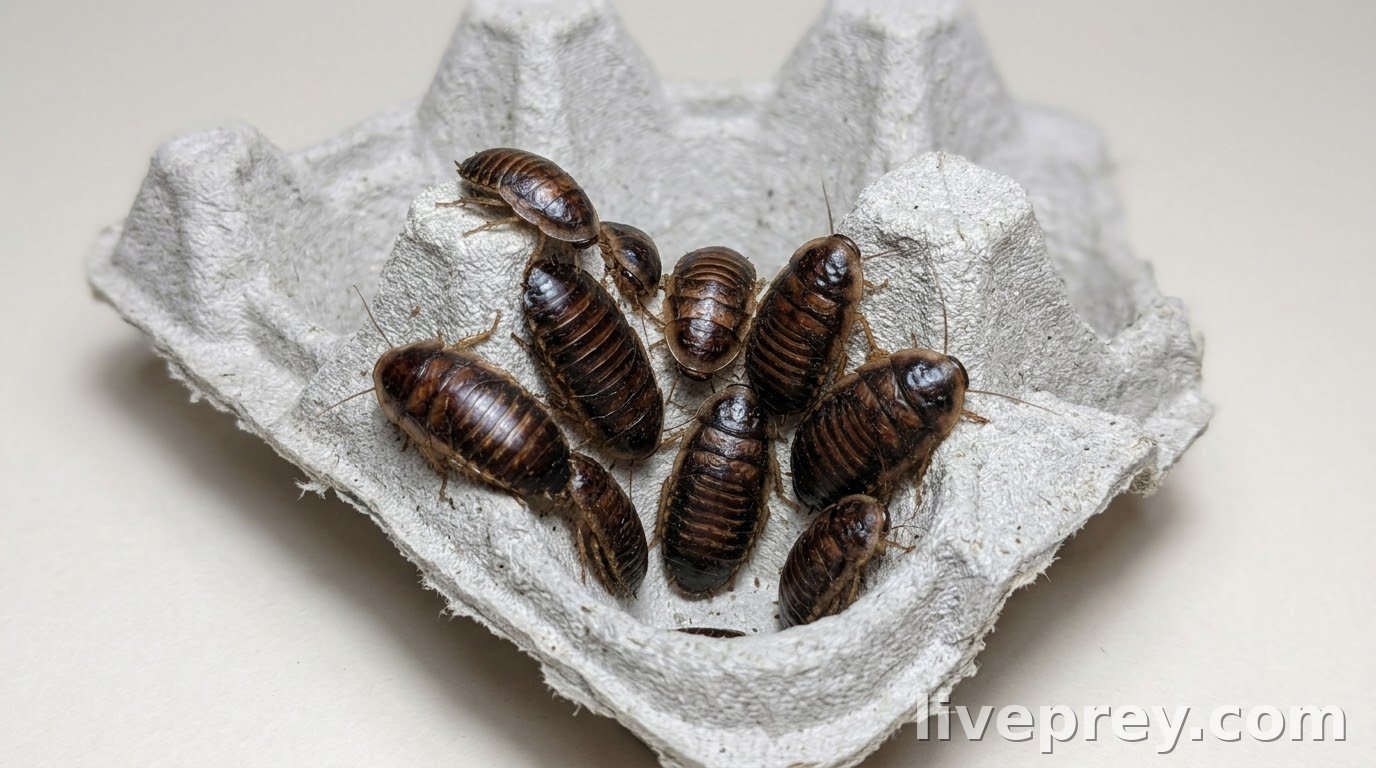
Dubia Roaches - Small - 500 ct
$62.94 FREE shipping
Additional units only $53.99 each.
Bulk pack of small dubia roaches at a much lower per-roach price — the economical way to feed a growing collection....
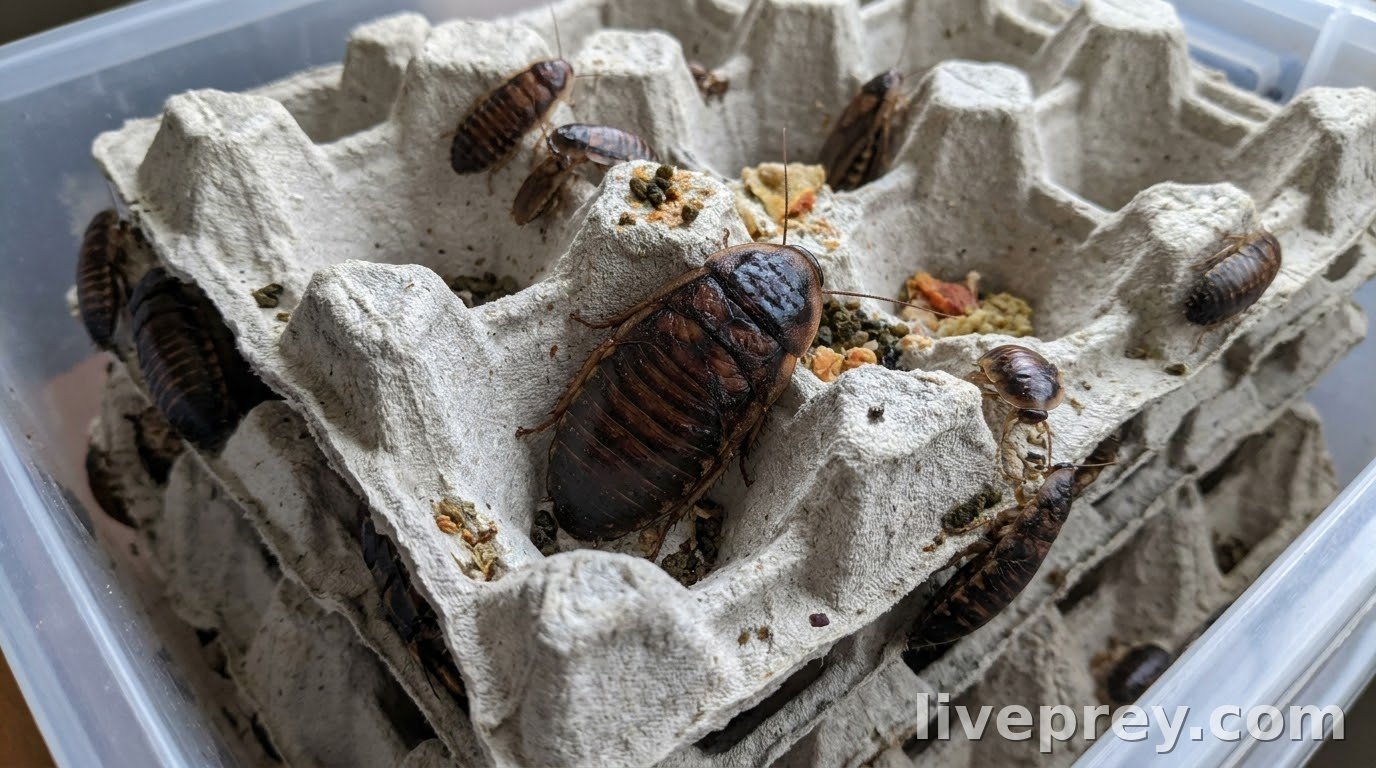
Dubia Roaches - Large - 100 ct
$32.99 FREE shipping
Large and adult dubia roaches for big lizards, monitors, and breeding colonies. Scarcer than smalls, and sized for animals that need a serio...
You order here; we place your order with the breeder, and the breeder ships direct to you. Live arrival is covered within the supplying breeder's window — see our live arrival policy. General keeper guidance only, not veterinary advice: if your animal is sick, not eating, or losing weight, see a reptile or aquatic vet.