
Ball python feeding guide
The short answer: feed juveniles every 5-7 days and adults every 10-14 days, with prey about as wide as the snake's widest point. Ball pythons are famous for fasting — a healthy adult refusing food for weeks is often normal, not an emergency.
Schedule by age
| Age | How often | Typical prey |
|---|---|---|
| Hatchling | Every 5-7 days | Pinky to fuzzy mouse |
| Juvenile | Every 7 days | Fuzzy to hopper mouse |
| Subadult | Every 7-10 days | Adult mouse to small rat |
| Adult | Every 10-14 days | Small rat |
One appropriately sized prey item per feeding is enough. Ball pythons do not need multiple prey items, and overfeeding an adult — especially a sedentary one — leads to obesity, which shortens lives.
Prey size
Match prey width to the snake's widest girth. For a growing snake, roughly 10-15% of body weight per feeding is a good target. See our frozen mouse sizes guide for the full chart. Thaw and warm the prey properly — see our thawing guide — since a cold or partially frozen rodent is a common reason for refusal.
When a ball python refuses food
Work through the usual causes in order:
- Shedding: snakes in shed often refuse — eyes go cloudy, skin dulls. Offer again after the shed completes.
- Season: many adults fast through winter and breeding season. If weight is stable, this is normal.
- Temperatures: check them first. The warm side should be about 88-92°F and the cool side about 78-80°F. A snake that's too cold won't digest and won't eat.
- Humidity: roughly 50-60%. Too dry causes shedding problems, which cause refusals.
- Stress: a new enclosure, too much handling, or too little hiding space all suppress feeding. Give the snake two snug hides (one warm, one cool) and leave it alone between attempts.
- Prey: try a smaller size, a warmer temperature, or feeding at night — ball pythons are nocturnal hunters.
Don't offer every day during a fast — that just stresses the snake. Offer once a week, and track weight monthly. A healthy adult can fast for months without harm, but steady weight loss, lethargy, or visible ribs mean a vet visit, not another week of waiting.
After feeding
Don't handle the snake for 24-48 hours after a meal — handling too soon is a classic cause of regurgitation, and regurgitation is hard on the snake. Keep handling gentle and infrequent in the first two days, and make sure the warm side is up to temperature so digestion proceeds normally.
Order the feeders in this guide
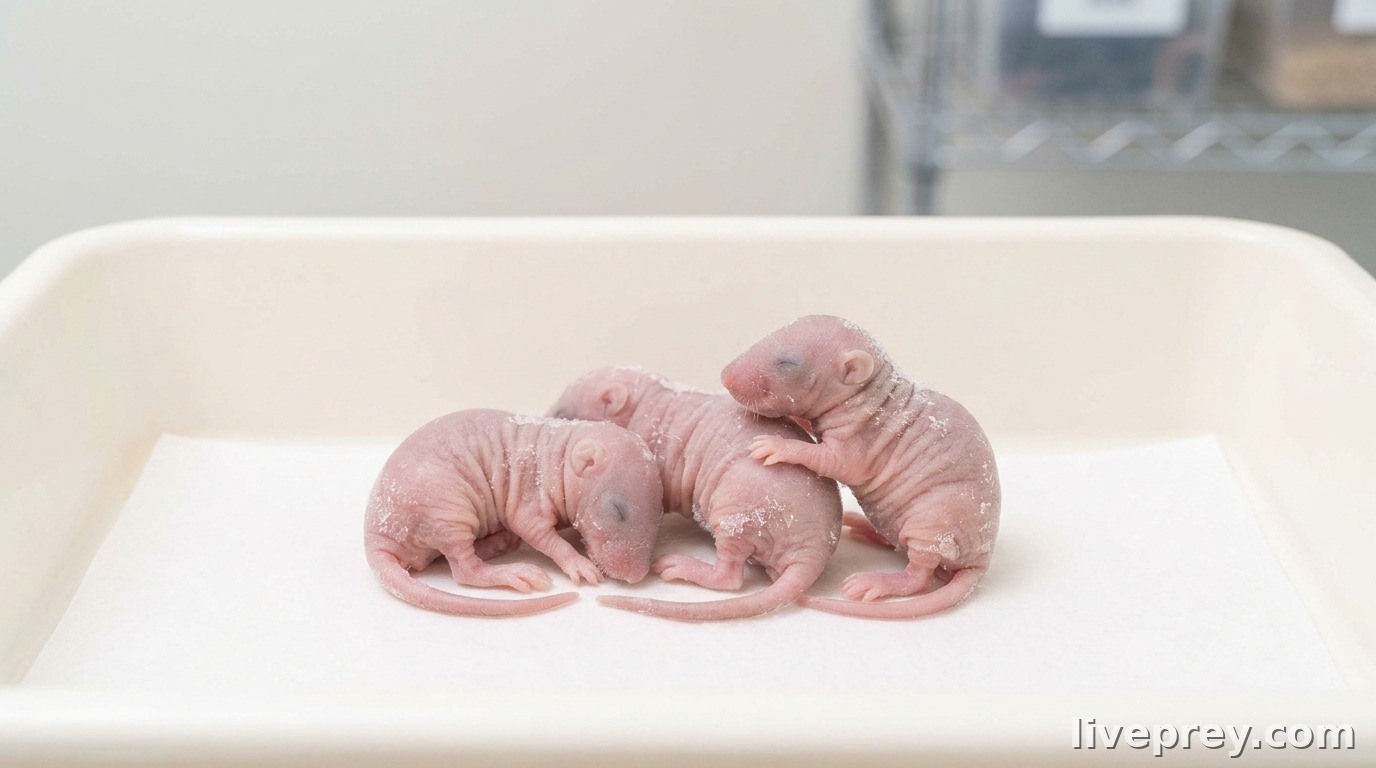
Frozen Pinky Mice - 100 ct
$56.99 FREE shipping
Frozen pinky mice for hatchling snakes and small colubrids. Breeder-direct, vacuum-sealed, and shipped frozen in insulated boxes with dry ic...
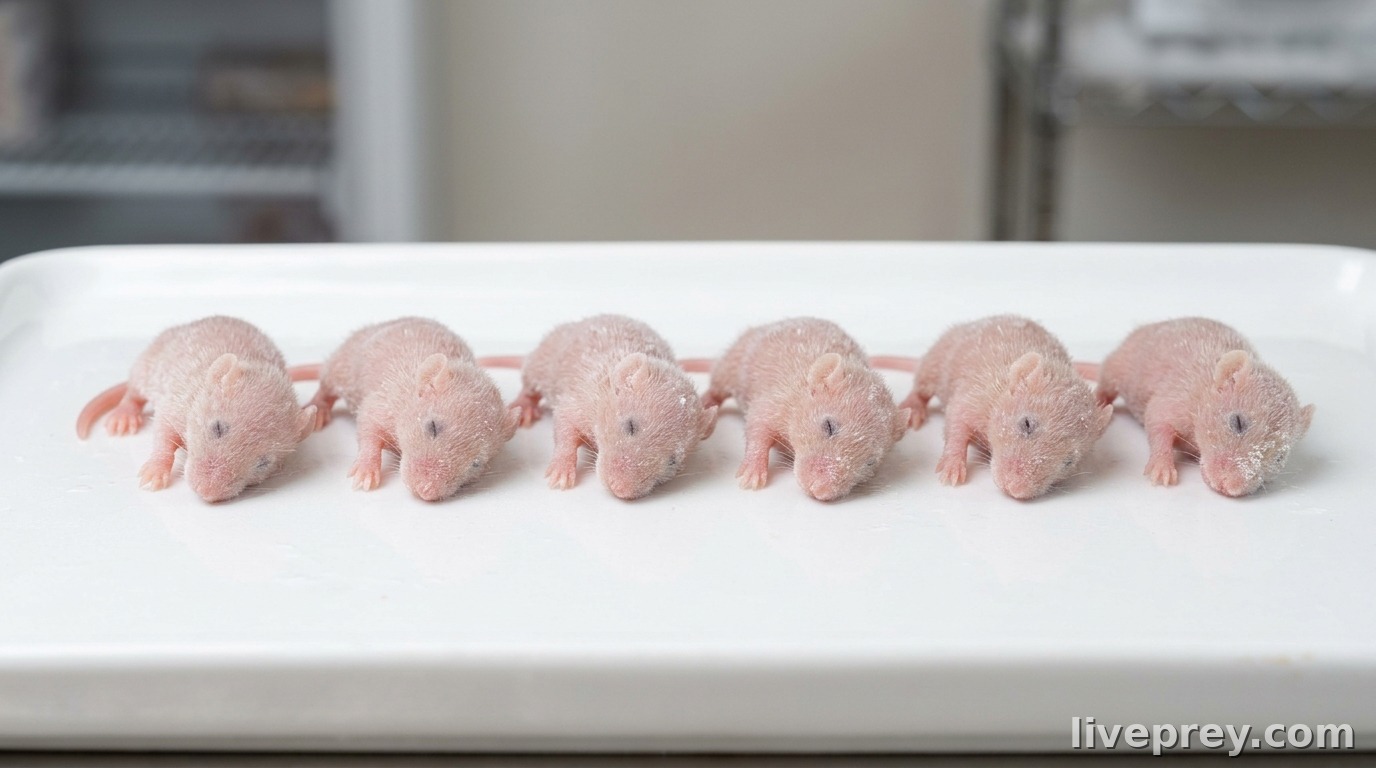
Frozen Fuzzy Mice - 100 ct
$72.99 FREE shipping
Frozen fuzzy mice for growing snakes moving up from pinkies. Shipped frozen with dry ice....
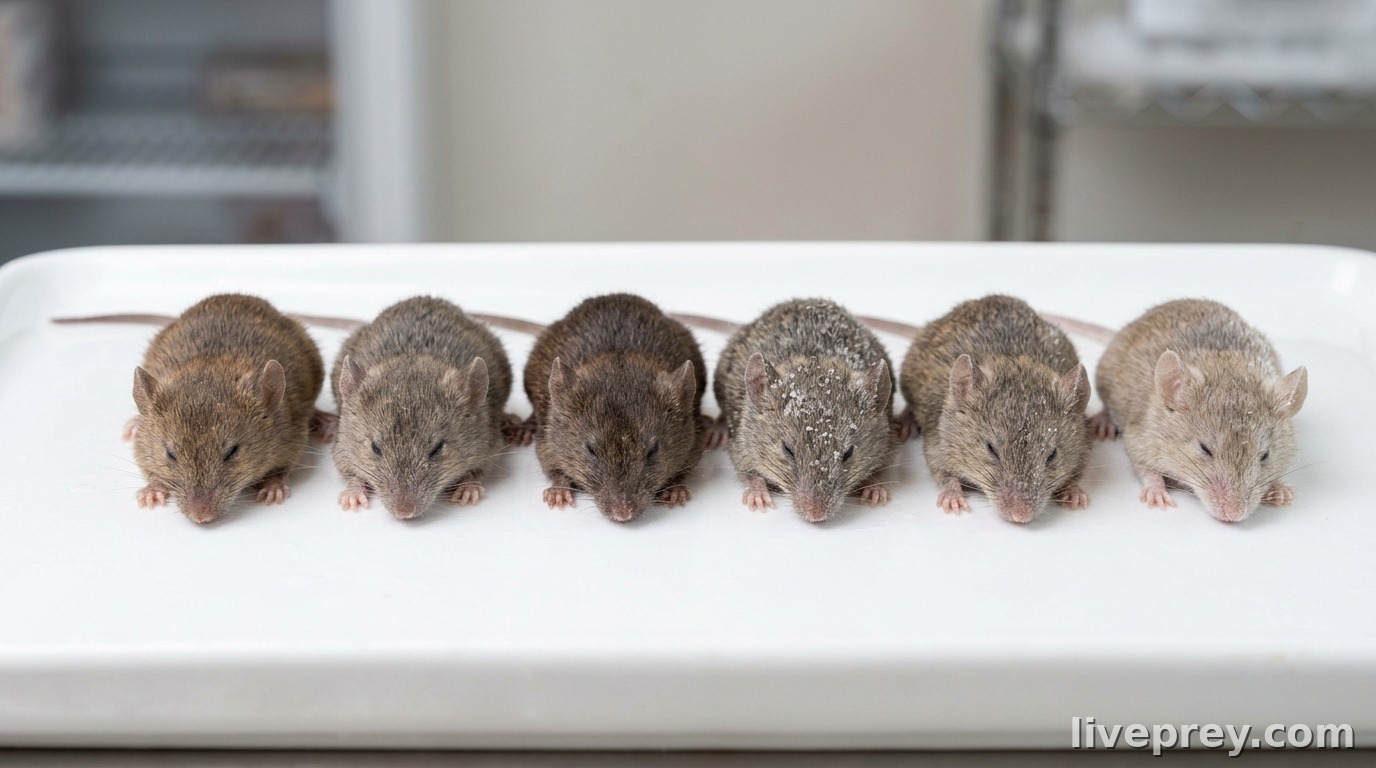
Frozen Large Mice - 50 ct
$64.99 FREE shipping
Frozen large mice — the volume staple for adult colubrids and smaller pythons. Shipped frozen with dry ice....
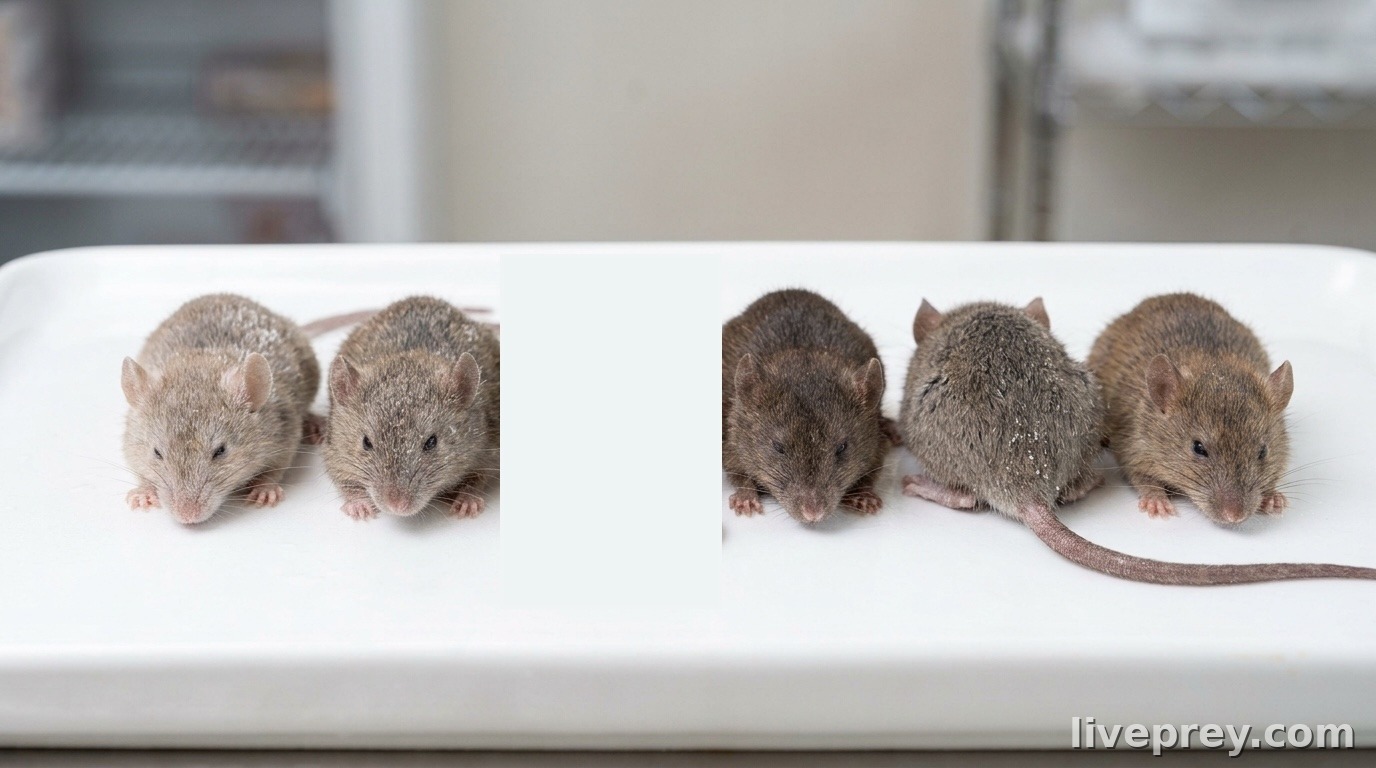
Frozen Small Rats - 20 ct
$73.99 FREE shipping
Frozen small rats for ball pythons and mid-size constrictors. Consistent sizing, shipped frozen with dry ice....
You order here; we place your order with the breeder, and the breeder ships direct to you. Live arrival is covered within the supplying breeder's window — see our live arrival policy. General keeper guidance only, not veterinary advice: if your animal is sick, not eating, or losing weight, see a reptile or aquatic vet.